Get a Quote Call our team on 07812 344364
A living room at dusk with a lamp lit

Services

A room at a time

We fit air-to-air reverse-cycle split systems in ordinary houses. The same appliance cools the room in summer and heats it in winter, which is what makes it worth putting in. Below are the rooms people most often want sorting, and what the system actually does in each of them.

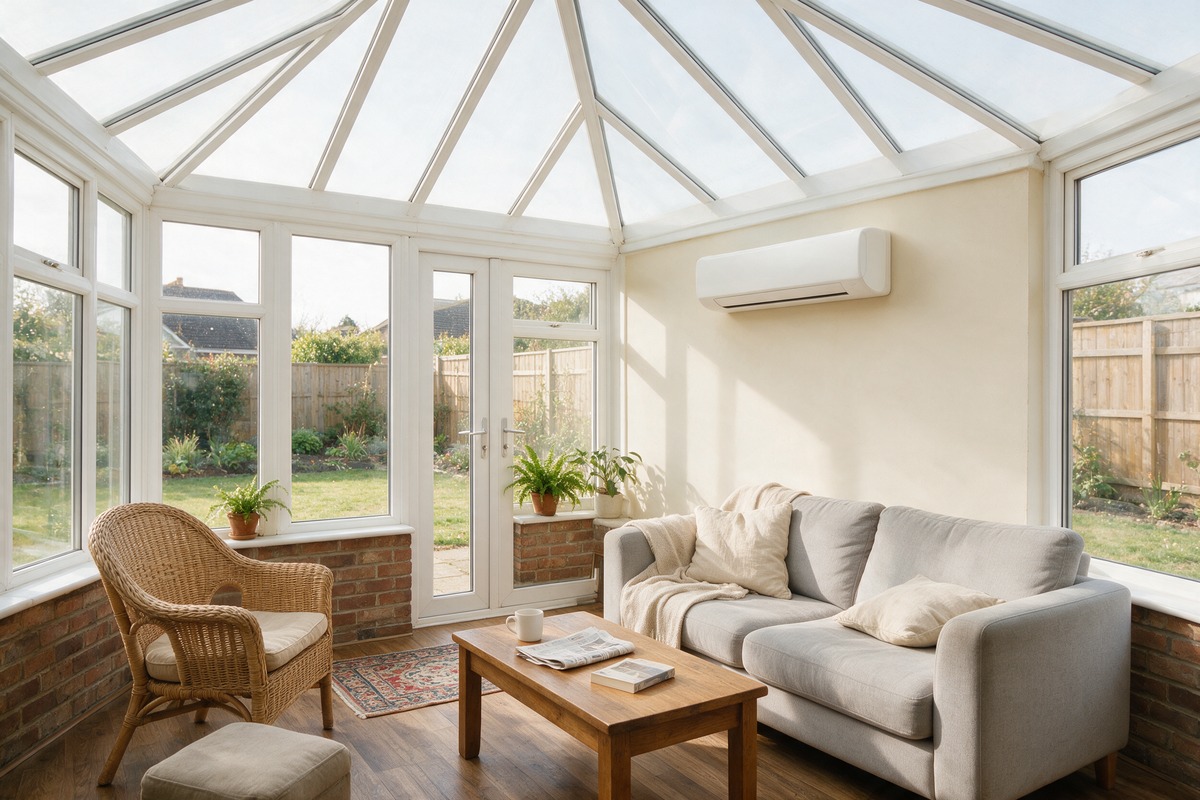
A conservatory in full sun, comfortable to sit in, with an air conditioning unit on the wall

Conservatories

A conservatory is mostly glass, and glass holds nothing. By late morning in June it is too warm to sit in. By November it is the coldest room in the house and the door stays shut. Most people end up getting a few weeks a year out of a room they paid a lot of money for.

A wall-mounted indoor unit deals with both ends of that problem. In summer it draws the heat out and holds the room at a temperature you set instead of one the weather sets. In winter it puts heat back in quickly, without waiting for the boiler to work its way round the house to a room at the far end of the system.

Conservatories are the main area we want to specialise in. If you have one you have stopped using, it is the first room worth talking about.
More on conservatories →

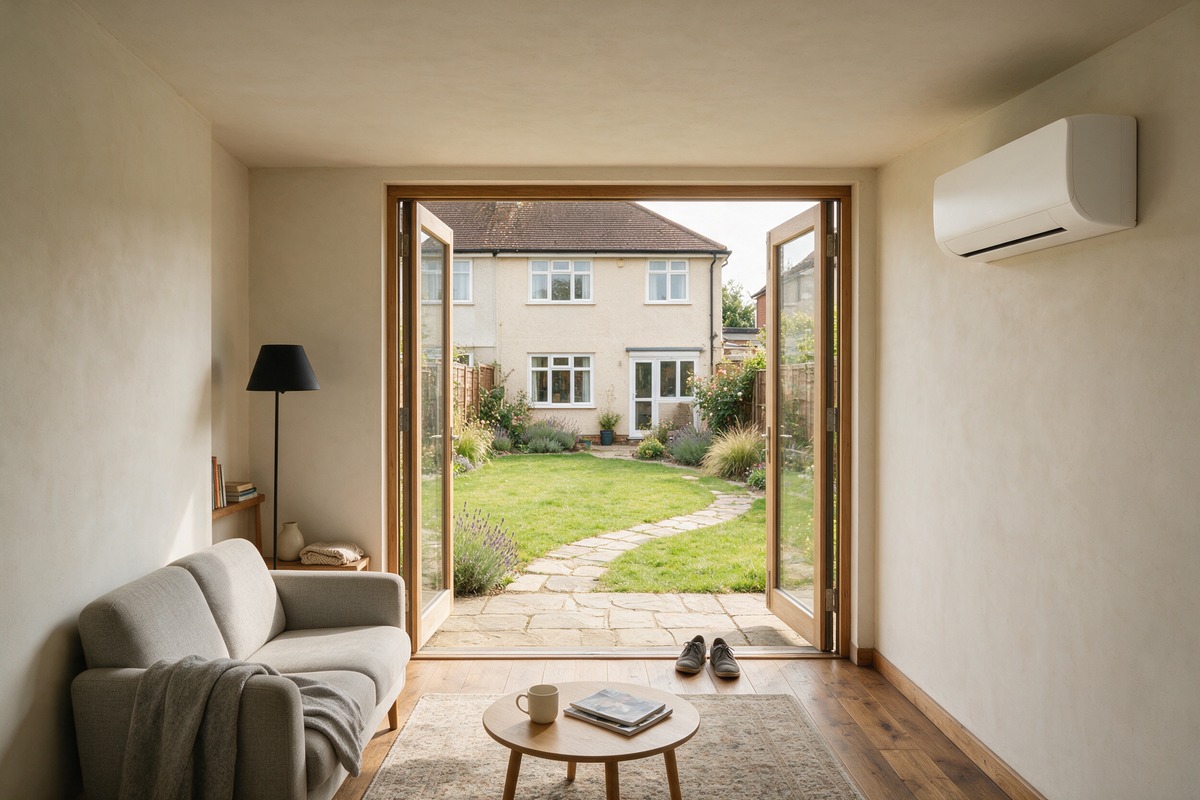
A garden room at the end of a garden, glazed along one side, with an air conditioning unit on the wall

Garden rooms

A garden room is a separate building, and it almost never sits on the house heating system. That leaves a plug-in heater for the winter and an open door with a fan in it for the summer. One of those is expensive to run and the other barely works.

A split system heats and cools the room on its own, with nothing running in the house at all. Because it holds a temperature you set rather than blasting and stopping, the room stays steady through the day instead of swinging. And it is quiet enough to sit in, which a fan heater is not.

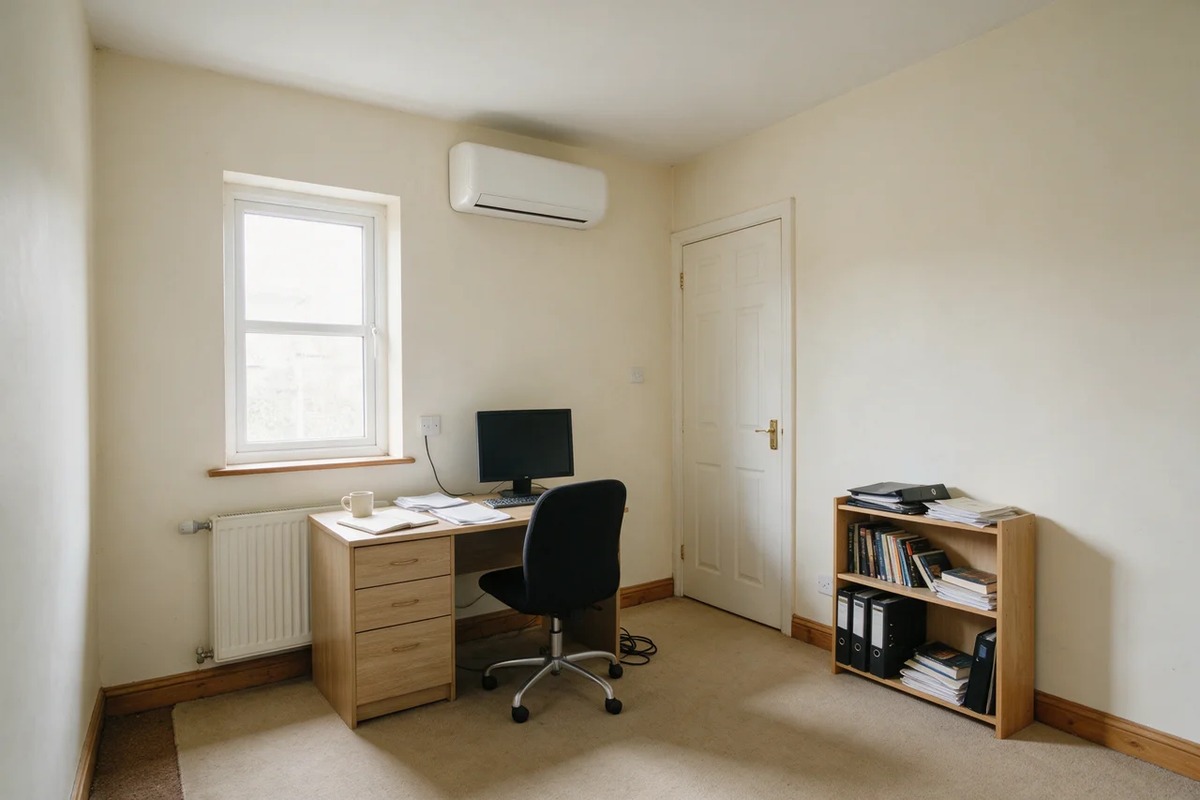
A home office in a converted spare room, a desk beside the window and an air conditioning unit on the wall

Home offices

An office in a spare room is one room in use all day while the rest of the house is empty. Heating it through the radiators means firing the boiler for the whole property to make one room workable, which is an expensive way to warm a desk.

Summer is the other half of it. A computer, a monitor and a south-facing window put out more heat than people expect, in a room that was sized as a bedroom and often has one small window to lose it through. An indoor unit takes that heat out, and in winter warms the room on its own without touching the house heating.

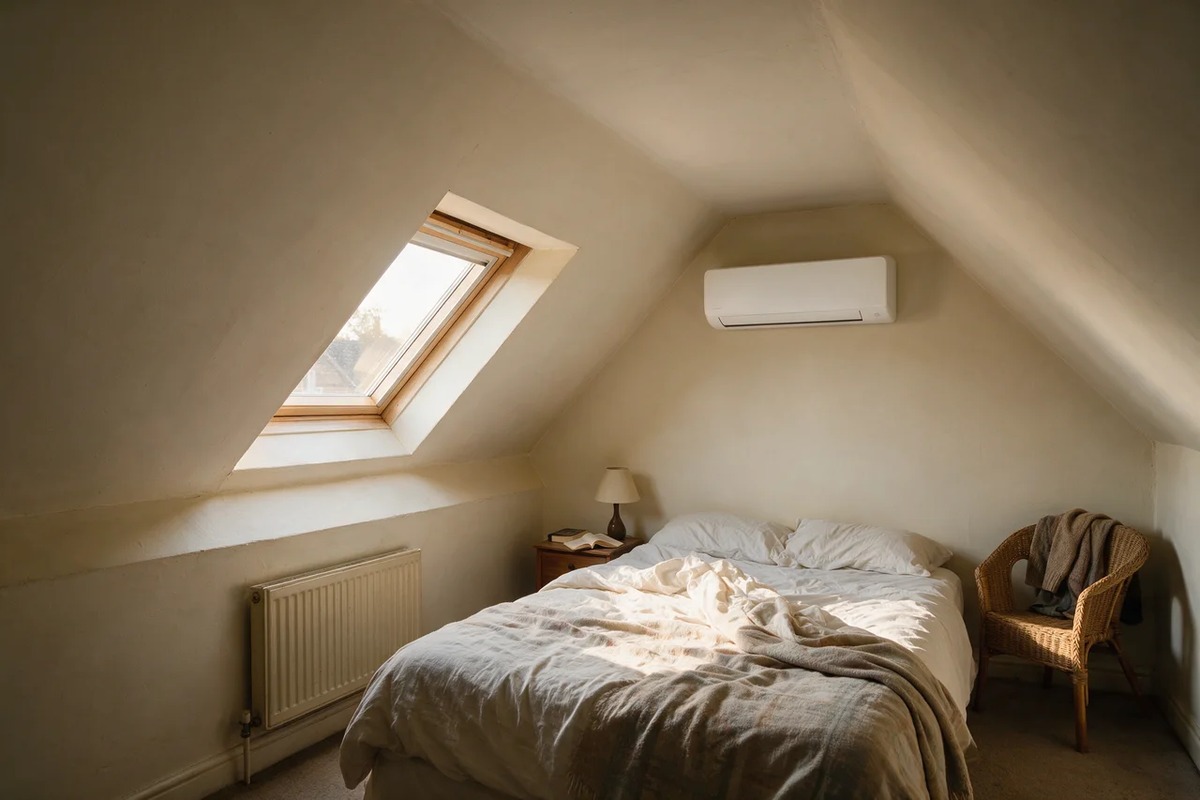
A loft room under sloping eaves with a roof window

Loft rooms

Heat rises, and in a loft conversion it has nowhere left to go. Add a roof taking sun all day and a single radiator that was sized when the space was still a spare room, and you get somewhere that is uncomfortably warm from spring through to autumn and slow to warm through in the depths of winter.

An indoor unit mounted high on the wall deals with the summer problem directly, and does the winter one with the same box. Loft rooms are often the last stop on the heating system, so having something in the room itself, under its own control, tends to make an obvious difference.

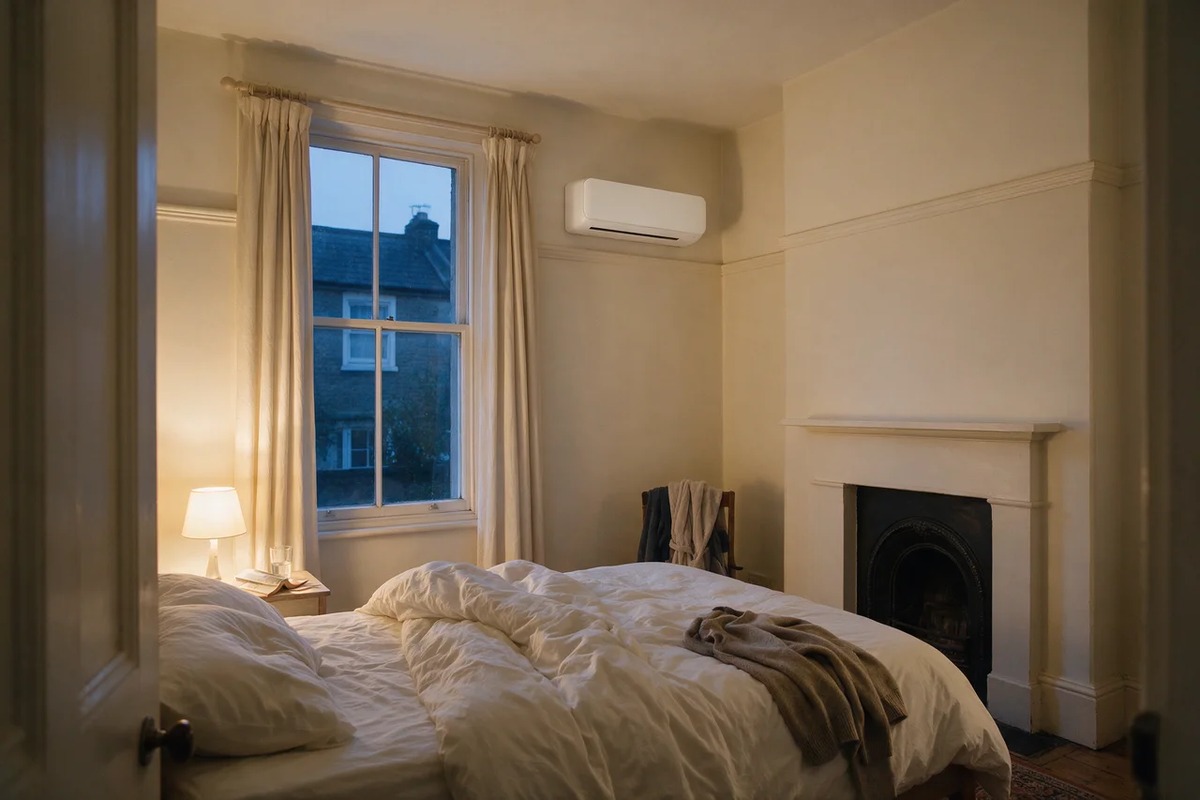
A bedroom in evening light with a bedside lamp on

Bedrooms

Warm nights are what makes most people pick up the phone about a bedroom. Opening a window helps a little, but it also lets in whatever is happening outside, and it is not something everyone wants to do on a ground floor.

A bedroom system lets you set a temperature and leave the window shut. Put it on a timer and it will bring the room down before you go up, then hold it there through the night. The same unit takes the chill off a cold bedroom in the morning in winter, without having to heat the whole house first to do it.

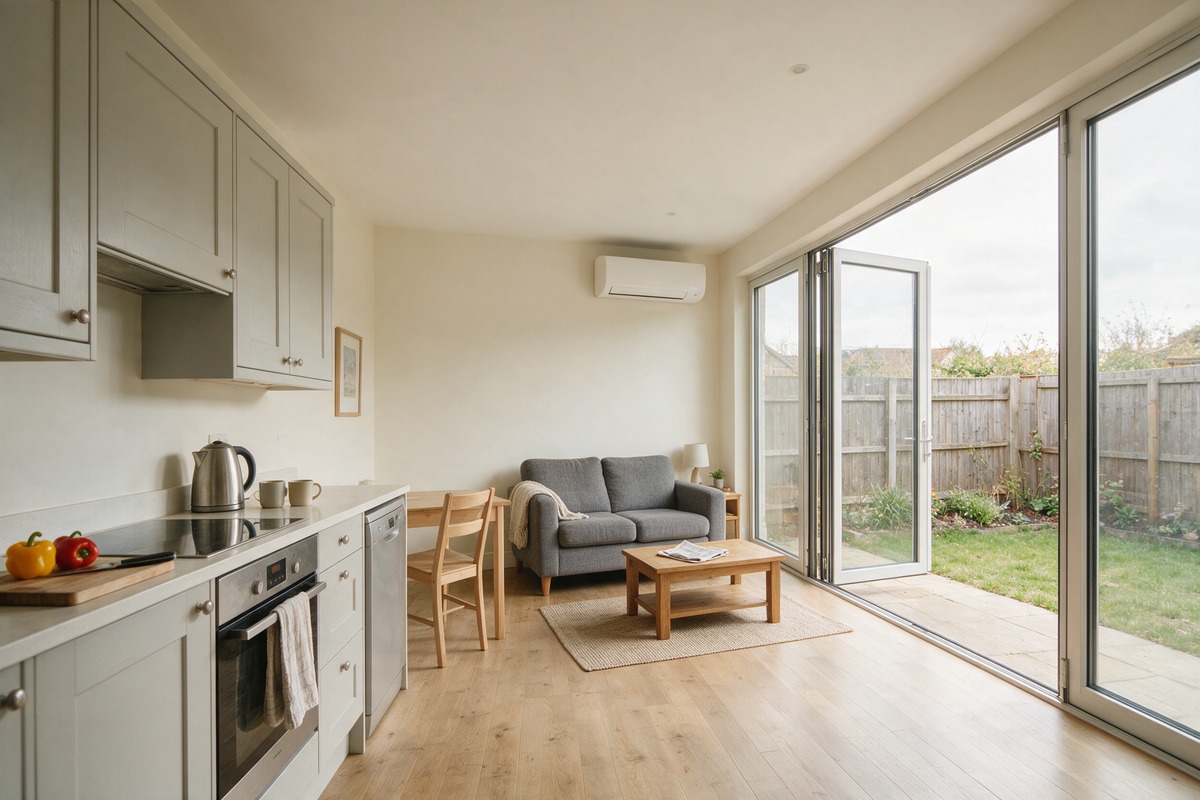
A kitchen and living room in everyday use

Kitchens and living rooms

Kitchens make their own heat. Ovens, hobs and a dishwasher all give it off, and in an open-plan layout it drifts straight through to wherever everyone is sitting. Living rooms with large windows or bi-fold doors have the same problem arriving from the other direction: lovely in April, uncomfortable in July, draughty in January.

A discreet indoor unit gives you control of the space both ways. In summer it takes the heat out rather than moving it around the room with a fan. In winter it warms the space quickly, so you can bring one room up to temperature for the evening without running the heating everywhere else at the same time.

How a job runs

Survey, quote, date

Three steps, in that order, with nothing to pay until you have decided.

  • A free site survey

    We come and look at the room properly: how it is built, where the sun lands, where the indoor and outdoor units can sensibly go, and how the pipe run between them would work. The survey is free and there is no obligation at the end of it.

  • An itemised quote

    Written down line by line — equipment, materials and labour — so you can see what you are paying for, and what would change if you chose a different unit or a different position.

  • A fixed fitting date

    When you are happy with the quote you get a date, not a window. We turn up on it, fit the system and leave you with something that works.

Afterwards

Keeping it running

Systems need servicing, and that has a page of its own — including systems we did not fit.

Where we work

Settle and the surrounding areas

Based in Langcliffe, just outside Settle, covering the Ribble Valley, the Lakes, Kirkby Lonsdale, Settle and Skipton, across to Ilkley. The full list is here, and if you are just outside it, ask anyway.

Which room is giving you trouble?

Tell us about it and we will come and look. The survey is free and the quote is itemised.

We fit

  • Mitsubishi
  • Daikin
  • Samsung
  • Panasonic
  • Toshiba
  • Bosch
  • Fujitsu
  • Midea
  • LG
  • electriQ

Which system suits you depends on the room, the layout and the budget. That is a conversation to have at the survey, standing in the room, rather than a decision to make off a website.